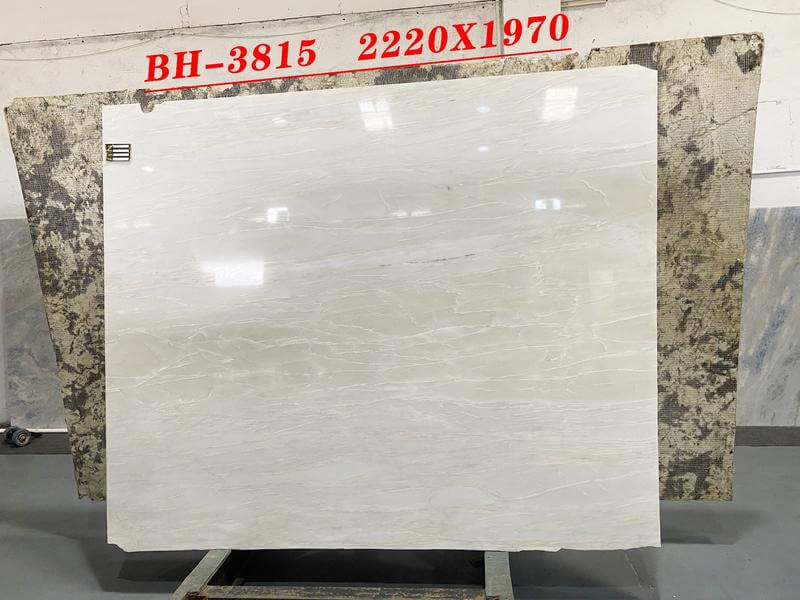
Taj Mahal quartzite is the stone the countertop world calls the most marble-like quartzite: a warm ivory-to-cream background swept by soft beige and gold veining, backed by near-granite durability. Quarried in Brazil, it is a true quartzite with a Mohs hardness of roughly 7, extremely low water absorption (typically under 0.1%), and density of about 2.65 g/cm³. On forums like Reddit's r/CounterTops it is the most discussed marble-look stone — buyers who want marble aesthetics without marble maintenance usually end up here.
Taj Mahal Quartzite Specifications
| Parameter | Specification |
|---|---|
| Stone Type | Natural quartzite (metamorphosed quartz sandstone) |
| Origin | Brazil |
| Mohs Hardness | ≈7 — wear resistance close to granite |
| Water Absorption | Very low, <0.1% |
| Density | ≈2.65 g/cm³ |
| Finishes | Polished, honed, leathered |
| Slab Sizes | 2000×1500mm and larger formats, custom cut-to-size |
| Acid Sensitivity | Low — resists household acids, unlike marble |
| Sealing Frequency | Every 1–2 years (routine precaution) |
Appearance: Soft Cream and Gold
Where most quartzites read as crystalline or busy, Taj Mahal keeps a calm, low-contrast painterly flow: warm white and cream fields crossed by gentle beige-gold movement that reads like a honed Calacatta marble from across the room. Tone varies gently between slabs — some blocks lean warmer gold, others cooler ivory — but overall consistency is high, which is why designers specify it for large uninterrupted runs like waterfall islands and full-height backsplashes. Every slab is still unique natural stone, so we share photos and videos of the exact stock before you commit, and bookmatched pairs are available for feature walls.
Where Taj Mahal Works
Recommended applications: kitchen countertops and islands (including heavy daily-use kitchens), waterfall edges, full-height backsplashes, bathroom vanities, shower walls, fireplace surrounds, and flooring in busy areas. Heat, knives, and acidic foods are all far less of a concern than with marble — if you love the painterly warmth of a stone like Pandora marble but need a surface that survives daily cooking, Taj Mahal is the practical choice.
Points to know before buying: Taj Mahal is priced as a premium stone, and because it is so hard, fabrication costs more and takes longer — diamond tooling wears quickly and mitered edges demand skilled hands (see the FAQ below). Neither is a reason to avoid it; both are reasons to budget accurately.
Care & Maintenance
- Sealing: porosity is very low, but we still recommend a quality impregnating sealer every 1–2 years as inexpensive insurance against oils and pigmented spills.
- Daily cleaning: pH-neutral stone cleaner or mild soap and a soft cloth; no abrasive creams or harsh degreasers, especially on honed and leathered finishes.
- Acid & heat: household acids (lemon, wine, vinegar) will not etch a true quartzite like Taj Mahal — the main reason people choose it over marble. Trivets under hot pans remain good practice with any natural stone.
- Spills: wipe oils, turmeric, coffee, and wine promptly; on a sealed surface they are not a threat, but routine care is what keeps stone looking new for decades.
As a direct supplier based in Nanzhuang, the heart of China's luxury stone trade, we offer large-format Taj Mahal slabs, bookmatched pairs, custom cutting, edge profiling, and worldwide shipping in secure wooden crates — with photos and videos of the actual slabs before you order.